Quick Answer: Itchy, watery eyes may be caused by allergies, dry eyes, or an eye infection such as conjunctivitis (also known as pink eye). Treatment will vary depending on the cause of the condition and may include allergy eye drops or antihistamines, eye drops to treat dryness, or a warm compress with proper hygiene to treat an infection. See an eye doctor if your symptoms persist or interfere with your vision.
“Why Are My Eyes So Itchy and Watery? Waking up with puffy, irritated eyes that feel like they’re never going to stop watering is never convenient, but it’s also very common. Fortunately, there are many possible causes of watery, itchy eyes, most of which are easily treated once the root cause has been determined.”
What Causes Itchy, Watery Eyes?
Your eyes water and itch for a reason. It’s usually your body’s way of flushing out something it doesn’t like, or reacting to inflammation on the surface of your eye. Here are the most common culprits.
1. Allergies (The #1 Cause)
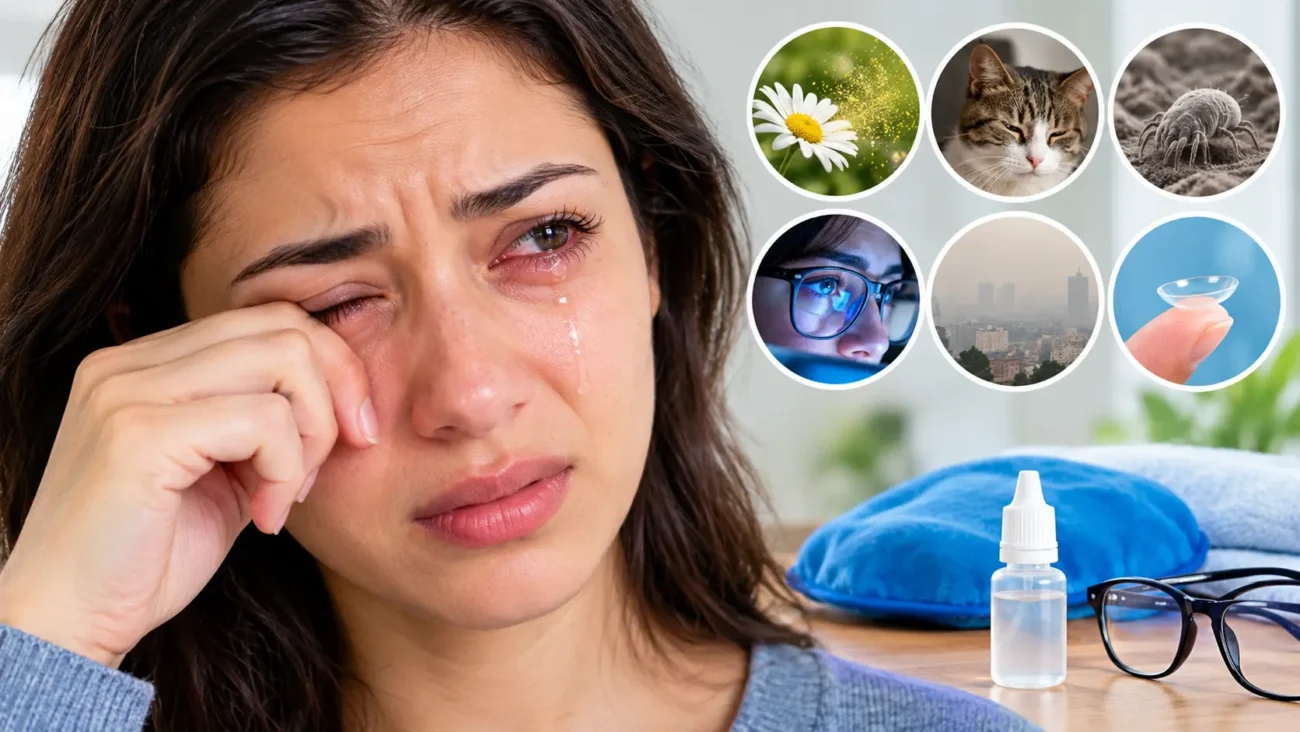
If your itchy eyes occur at a particular time of year or after being around pets, dust, or freshly cut grass, you might have allergies. Eye allergies happen when eyes come into contact with an allergen or a substance that causes the eye to create histamine, a chemical that makes the eyes red, swollen, and itchy. Your eyes may also water and feel irritated. Approximately 25% of American adults experience some form of seasonal allergies each year. If you have eye allergies, there is a good chance that you may also experience an itchy, runny, and congested nose and sneezing.
Common allergy triggers include:
- Pollen from trees, grass, and weeds
- Dust mites
- Pet dander
- Mold spores
2. Dry Eyes
It sounds backwards, but dry eyes can actually make your eyes water a lot. When the surface of your eye doesn’t have enough moisture, it gets irritated — and your eyes overcompensate by producing extra tears to try to fix the problem. This is one of the most overlooked causes of watery eyes, especially for people who stare at screens all day or spend time in air-conditioned rooms.
3. Pink Eye (Conjunctivitis)
Pink eye is another frequent cause of watery, itchy eyes. It can come from a virus, bacteria, or even allergies, and it tends to make your eyes look pink or red and feel gritty, almost like there’s sand in them. Viral pink eye usually clears up on its own without treatment, while bacterial pink eye may need antibiotic eye drops. One helpful clue: colds and viruses can make eyes water, but they rarely make them itch the way allergies do.
4. Irritants and Dust
Smoke, strong perfumes, chlorine from a pool, or even a stray eyelash can irritate your eyes enough to trigger itching and tears. This kind of irritation is usually short-lived and clears up once the irritant is gone.
5. Blocked Tear Ducts
In babies and young children, a blocked tear duct is the most common reason for eyes that water all the time, while in older adults, watery eyes can happen as sagging eyelid skin pulls away from the eyeball. This is less common in healthy adults but worth mentioning if your symptoms are ongoing and don’t match allergies or dryness.
How to Tell Allergies Apart From a Cold or Infection
This trips a lot of people up, so here’s a simple way to check:
- Itchy AND watery, in both eyes → Most likely allergies
- Watery but not itchy, with a cold → Probably a virus, not allergies
- Red, gritty, and crusty in the morning, maybe just one eye → Possible pink eye
- Dry, gritty feeling that gets worse by end of day, especially with screen use → Likely dry eyes
Itchy, red, and watery eyes are common with allergies but not as common with a regular cold, so that itch is actually a useful clue.
Simple, Effective Ways to Find Relief
You don’t need anything fancy to feel better. Try these first:
- Stop rubbing your eyes. It feels good for a second but makes the itching and swelling worse.
- Use a cool compress. A clean, damp washcloth over closed eyes for a few minutes calms down itching and puffiness fast.
- Rinse with cool water. This helps flush out pollen, dust, or anything else that’s bothering your eyes.
- Try artificial tears. Artificial tear drops help wash allergens off the surface of the eye and also add moisture for dry, irritated eyes — a two-in-one fix.
- Try an antihistamine eye drop. Antihistamine eye drops are made specifically to relieve itchy, red, and swollen eyes, and many are available over the counter.
- Take an oral antihistamine if needed. Oral antihistamines can ease itchy or watery eyes along with a runny nose and other allergy symptoms, and many are available without a prescription — though they can sometimes dry your eyes out more.
- Wash your hands and bedding. This matters most if you suspect pink eye, since it helps stop it from spreading.
If home care doesn’t cut it, a doctor-prescribed corticosteroid eye drop can bring real relief for itchy, red, or watery eyes when other treatments haven’t worked, though it’s usually monitored by an eye doctor because of side-effect risks like cataracts or glaucoma.
When to See a Doctor
Most itchy, watery eyes clear up with simple home care. But check in with a doctor or eye specialist if you notice:
- Pain, not just irritation
- Changes in your vision
- Thick yellow or green discharge
- Symptoms lasting more than a week despite treatment
- Sensitivity to light
- Swelling that spreads beyond your eyelid
FAQ
Q: Why are both my eyes itchy and watery at the same time? A: This pattern is classic for allergies. Allergic conjunctivitis usually affects both eyes at once, unlike some infections that often start in just one.
Q: Are itchy watery eyes contagious? A: Allergy-related itchy eyes are not contagious. Pink eye caused by a virus or bacteria can be contagious, so it’s smart to avoid sharing towels and to wash your hands often until it clears.
Q: Can allergy season really cause eye symptoms every year? A: Yes. Hay fever causes watery, itchy, red eyes along with sneezing and a stuffy nose, and it happens because the immune system reacts to something harmless, like pollen, as if it were a threat.
Q: Do antihistamine pills work as well as eye drops for itchy eyes? A: Eye drops usually work faster and more directly for eye symptoms. Oral antihistamines can help some, but they may dry out your eyes and even make eye allergy symptoms slightly worse for some people.
Q: What’s the fastest way to calm down itchy eyes right now? A: A cool, damp compress over closed eyes for 5–10 minutes is one of the quickest ways to ease itching, along with rinsing the eyes with cool, clean water.
The Bottom Line
Itchy, watery eyes are usually your body reacting to allergens, dryness, or irritation — and in most cases, relief is as simple as a cool compress, artificial tears, or an antihistamine eye drop. Pay attention to how your symptoms show up, since that’s often the best clue to the cause. If things don’t improve, or symptoms feel severe, it’s worth having an eye doctor take a closer look.
Helpful Resources
• American Academy of Ophthalmology – Eye Allergies
• Mayo Clinic – Watery Eyes: Causes