
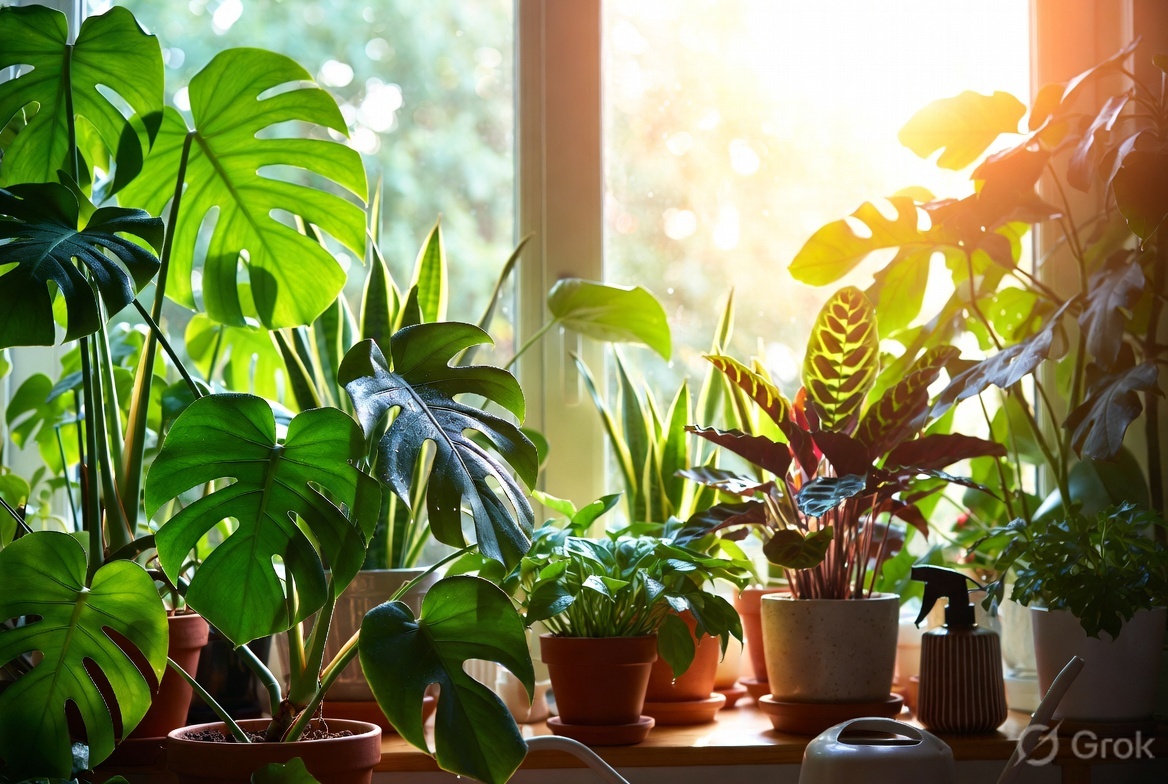
When it comes to Summer Houseplant Care, I wanted “water more in summer” to be the whole answer. The equation was simple: higher temperatures mean faster evaporation; faster evaporation means drier soil, drier soil means your plant needs more water. For any plant owner watching leaves curl in July, that logic feels bulletproof. It’s the advice you’ll find repeated on nearly every plant care account, usually with zero nuance attached.
That was my assumption too, going into this. Then I spent a few summers actually tracking what was killing plants in my own apartment, comparing notes with growers, and reading through the actual physiology of how plants behave when the temperature climbs. The conclusion? More water is not the fix. That would almost be too easy.
It’s worse than that. Overwatering in summer is one of the most common ways people accidentally kill a plant that would have survived the heat just fine on its own. But the plants that do struggle in summer aren’t struggling for the reason most people assume, and the fixes that actually work aren’t the ones getting repeated in every “10 plant hacks” post.
Why summer isn’t just “winter but hotter”
Summer changes three things at once: light intensity, temperature, and humidity. Most advice treats these as one variable — heat — and tells you to compensate with water. But a plant’s water needs are driven by how fast it’s photosynthesising and transpiring, not by the thermometer alone.
Longer daylight hours and stronger light mean most houseplants are actively growing in summer, which does increase their water and nutrient use. That part of the common advice is correct. Where it goes wrong is assuming every plant, in every location, needs the same increase. A pothos six feet from a window is not using water at the same rate as a succulent baking on a south-facing sill.
The watering mistake I kept making
Here’s what I actually did wrong for two summers straight: I watered on a schedule instead of watering based on the plant. Every three days, like clockwork, regardless of whether the soil was still damp.
The problem is that soil dries from the top down. The surface can look and feel bone-dry while the root zone underneath is still saturated. Water on top of that, and you’re not hydrating a thirsty plant — you’re suffocating roots that already had enough. Root rot doesn’t announce itself immediately either. By the time leaves start yellowing or the stem feels soft, the damage below the soil line is usually well underway.
The fix that actually worked was boring: stick a finger two inches into the soil before watering, every time, no exceptions to the schedule. If it’s still moist, wait. Terracotta pots and moisture meters help if you want something more precise, but the finger test costs nothing and is right often enough to trust.
Light does more damage than heat does
A lot of “summer plant stress” gets blamed on temperature when the actual cause is direct sun exposure that wasn’t a problem in winter. The sun’s angle shifts through the year, and a spot that gave a plant gentle indirect light in January can be delivering hours of harsh, direct afternoon sun by July.
Scorched, bleached, or crispy patches on leaves are usually a sunlight problem, not a watering problem — and this is where I’ve seen people make things worse by responding with more water when the real fix is moving the plant six feet back from the glass or adding a sheer curtain. Watering a sunburnt plant more often doesn’t undo the damage; it just adds the overwatering problem on top of the sunburn.
Humidity is the variable nobody adjusts for
Air conditioning is the quiet houseplant killer of summer. It cools a room efficiently, but it also strips moisture out of the air, and most tropical houseplants – monsteras, calatheas, ferns, and similar species – evolved in humidity levels most homes never get close to, even in summer.
The result is crispy leaf tips and edges that people often misdiagnose as underwatering, which leads right back to the overwatering mistake described above. Grouping humidity-loving plants together, running a small humidifier nearby, or setting pots on a tray of pebbles and water (without letting the pot itself sit in the water) addresses the actual cause instead of masking a symptom with more soil moisture.
Fertilizing: yes, but not aggressively
Summer’s longer light hours mean active growth for most houseplants, and active growth does draw down nutrients in the soil faster than in winter dormancy. A diluted, balanced liquid fertilizer every two to four weeks during summer growth is reasonable for most common houseplants.
What doesn’t hold up is the idea that more fertilizer equals more growth. Overfertilising in summer heat is a fast way to burn roots, especially in a plant that’s already under mild water stress from heat or light exposure. If in doubt, dilute further than the label suggests and watch the plant’s response over a few weeks rather than increasing the dose.
What I’d actually tell someone before summer starts
Check the soil before you water it, not the calendar. Reassess where each plant sits relative to the summer sun angle, not just where it sat in spring. Treat crispy leaf tips as a humidity or airflow problem before assuming it’s thirst. And go easy on the fertiliser — active growth is not the same thing as a plant that can absorb unlimited nutrients.
None of this is complicated once you separate the variables. The mistake most of us make, myself included, is reaching for the same lever — water — for every problem summer throws at a plant, when heat, light, humidity, and nutrients are each doing something different to it at the same time.
