

There’s something quietly powerful about a senior stepping off a plane in a new city — passport in hand, no one else to wait for, nothing to decide but what to see first. Solo travel after 60 isn’t a compromise. For millions of older adults, it’s the best kind of freedom they’ve ever tasted.
According to AARP’s 2023 Travel Trends report, nearly 47% of solo travelers in the United States are over the age of 60, and that number keeps climbing. Whether it’s a long-postponed dream trip to Europe or a train journey across the American Southwest, seniors are hitting the road — alone and loving it.
But smart travel means prepared travel. If you’re a senior planning your first solo adventure — or your fifteenth — these 10 tips will help you travel with more confidence, comfort, and peace of mind.

1. Visit Your Doctor Before You Pack Your Bags
This isn’t the most exciting tip, but it might be the most important one.
Book a pre-travel medical checkup at least six to eight weeks before departure. Talk to your doctor about:
- Any vaccinations required or recommended for your destination
- Adjusting medications across time zones
- Managing existing conditions (heart health, diabetes, mobility issues)
- Getting fit-to-fly documentation if needed
The Centers for Disease Control and Prevention (CDC) recommends that travelers aged 65 and older pay special attention to destination-specific health risks. Their website (cdc.gov/travel) has country-by-country health advisories updated regularly — bookmark it.
Also, ask your doctor for a brief written summary of your medical history. If something happens abroad, local doctors will thank you for it.
2. Get the Right Travel Insurance — Don’t Skip This
Here’s a truth many travelers learn the hard way: standard travel insurance often falls short for seniors.
Look specifically for policies that cover:
- Pre-existing medical conditions (many budget plans exclude these)
- Emergency medical evacuation — this alone can cost $50,000 or more without coverage
- Trip cancellation and interruption
- Lost baggage and travel delays
Companies like Allianz, Travel Guard, and InsureMyTrip offer senior-friendly plans with solid medical coverage. The U.S. Travel Insurance Association recommends comparing at least three quotes before buying.
One rule of thumb: never travel internationally without at least $100,000 in emergency medical coverage. It sounds like a lot until you need it.
3. Share Your Itinerary With Someone You Trust
Before you leave, give a trusted friend or family member a copy of:
- Your full travel itinerary (flights, hotels, tours)
- Copies of your passport, visa, and insurance documents
- Emergency contact numbers at your destination
- The number of the nearest U.S. embassy or consulate
Check in with them every couple of days. A quick text saying “arrived safely in Barcelona” takes ten seconds and gives your loved ones real peace of mind.
You can also register your trip with the Smart Traveler Enrollment Program (STEP) at step.state.gov — a free service run by the U.S. State Department that allows American travelers abroad to receive safety alerts and makes it easier to locate you in an emergency.
4. Pack Light, Pack Smart
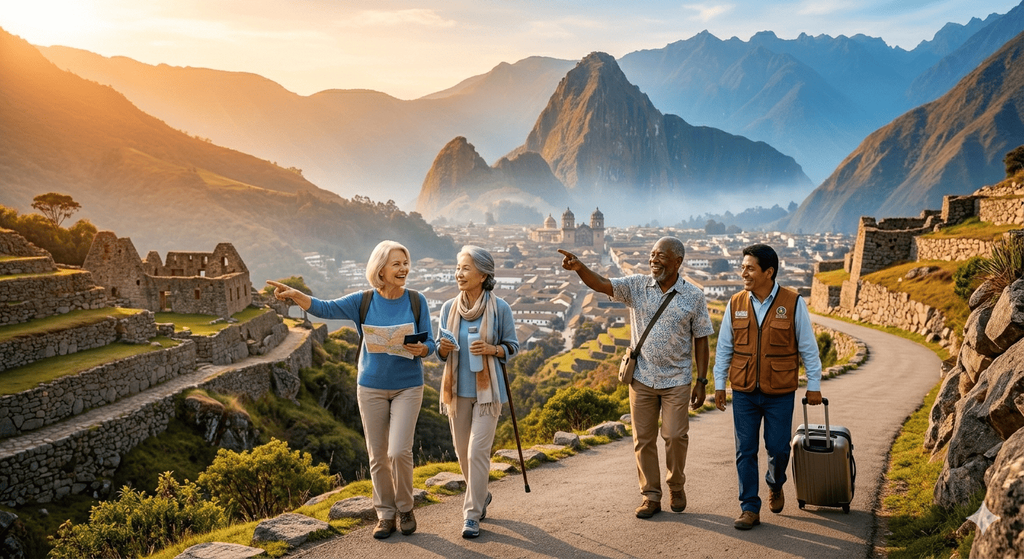
Lugging a heavy suitcase is nobody’s idea of a good time — and for solo senior travelers, it can be genuinely exhausting or even risky.
Pack with these principles in mind:
- Choose a carry-on sized rolling suitcase or a quality backpack with wheels. Aim for under 20 pounds.
- Bring a small crossbody bag for daily essentials — it keeps your hands free and your valuables close.
- Pack all medications in your carry-on, never in checked luggage.
- Include a small first-aid kit: pain relievers, antidiarrheal medication, bandages, and any prescription drugs with extra supply in case of delays.
- Bring copies (not originals) of important documents. Store digital copies in your email as a backup.
Rolling instead of lifting saves your back. And a lighter bag means more energy for the things that actually matter.
5. Choose Senior-Friendly Accommodations
Where you stay makes a big difference in how comfortable and safe your trip feels.
When booking, look for:
- Ground floor or elevator access — especially important if you have knee or hip concerns
- Hotels with 24-hour front desk staff
- Neighborhoods that are walkable, well-lit, and safe
- Properties with good reviews from solo or senior travelers (check TripAdvisor’s filters)
Many hotel chains — including Marriott, Hilton, and IHG — offer senior discount rates for travelers 60 and older. Always ask, even if it’s not advertised. For longer stays, consider serviced apartments or platforms like Vrbo, which give you a kitchen, more space, and the comfort of feeling at home.
Where you stay makes a big difference in how comfortable and safe your trip feels.
When booking, look for:
- Ground floor or elevator access — especially important if you have knee or hip concerns
- Hotels with 24-hour front desk staff
- Neighborhoods that are walkable, well-lit, and safe
- Properties with good reviews from solo or senior travelers (check TripAdvisor’s filters)
Many hotel chains — including Marriott, Hilton, and IHG — offer senior discount rates for travelers 60 and older. Always ask, even if it’s not advertised. For longer stays, consider serviced apartments or platforms like Vrbo, which give you a kitchen, more space, and the comfort of feeling at home.
6. Plan for Mobility — But Stay Flexible
You don’t need to be an athlete to travel solo, but you do need to be honest with yourself about your physical limits.
A few practical steps:
- Research accessibility before you go. Websites like AccessibleGO and Sage Traveling specialize in accessible travel for older adults and those with mobility needs.
- If you use a cane, walker, or wheelchair, notify airlines and hotels in advance. Most are very accommodating with advance notice.
- Book walking tours with smaller groups and shorter distances.
- Build in rest days — not every day needs to be a marathon.
Traveling solo actually gives you a huge advantage here: you set the pace. No one is rushing you. If you want to sit in a café for two hours watching the world go by, you absolutely can.
7. Stay Connected — Affordably
Getting a local SIM card or an international data plan before you travel is one of the smartest things you can do.
Options to consider:
- Google Fi or T-Mobile offer international plans that work in 100+ countries
- Buy a prepaid local SIM card at most international airports — often cheaper than roaming
- Download offline maps via Google Maps or Maps.me before you arrive — so you’re never truly lost without Wi-Fi
Also download these apps before departure:
- Google Translate (works offline for 60+ languages)
- TripIt for organizing your itinerary
- WhatsApp for free international messaging
- Uber or local equivalents for safe, easy transportation
Staying connected doesn’t just mean staying in touch with home. It means navigating confidently, finding help when needed, and making the most of every day.
8. Be Aware of Scams Targeting Solo Travelers
Unfortunately, solo travelers — especially seniors — can be targets for scams. The good news? Awareness is your best protection.
Common travel scams to watch out for:
- Fake taxi drivers who approach you at airports (always use official taxi ranks or pre-booked rides)
- Overfriendly strangers who offer to “help” and then demand payment
- Unofficial tour guides with “special deals”
- Distracting street performers while an accomplice pickpockets you
Tips to stay safe:
- Use a money belt or hidden pouch under your clothing for your passport and extra cash
- Don’t flash expensive jewelry, cameras, or large amounts of cash
- Trust your gut — if something feels off, walk away
- Stick to well-traveled areas, especially after dark
The U.S. State Department and travel safety organization OSAC (Overseas Security Advisory Council) both publish detailed safety reports by country at osac.gov.
9. Embrace Group Tours for Some Legs of the Trip
Solo doesn’t have to mean alone every single moment.
Joining a group tour for part of your trip is a brilliant strategy for senior solo travelers. It gives you:
- Built-in companionship and social connection
- Expert local guides who handle logistics
- Added safety in unfamiliar areas
- The chance to meet like-minded travelers
Companies like Road Scholar (formerly Elderhostel) and Overseas Adventure Travel (OAT) specialize in small-group tours designed specifically for travelers over 50. Their itineraries are thoughtfully paced, culturally rich, and genuinely excellent.
You can join a group tour for just one or two days of your trip — say, a cooking class in Florence or a guided walk through Kyoto — and spend the rest of the time doing your own thing.
10. Trust Yourself — You’ve Earned This
Of all the tips on this list, this one might be the most important.
Solo travel as a senior requires a certain kind of quiet confidence. And here’s the truth: you have decades of life experience behind you. You’ve solved hard problems. You’ve navigated difficult situations. You know yourself better than most people ever will.
Yes, things will go wrong occasionally. A flight will be delayed. You’ll take a wrong turn. A restaurant will be closed. That’s not a disaster — that’s travel. And more often than not, those unexpected moments turn into the best stories.
Connect with other senior solo travelers in communities like Solo Travelers World (solotravelerworld.com) or AARP’s travel forums. Read their stories. Share your own. You’ll quickly realize that the world is full of people your age doing exactly what you’re dreaming of doing.
So book the trip. Pack the bag. Go.
